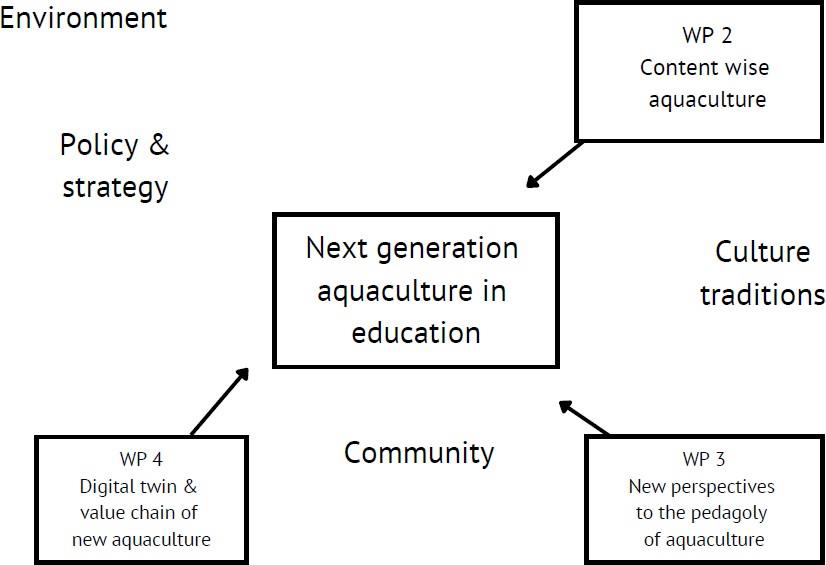
The methodology of the AQUADEVBUS –project has three core elements: main substance of aquaculture education development with special reference on integrated aquaculture, pedagogical practices and knowledge transfer via digital twins –methods linked with aquaculture farm business development. All these cornerstones or main targets are linked with each other to serve the purposes of effective and sustainable capacity building in HEI aquaculture education.
Content wise (WP2). Our concept is based on long experiences in aquaculture in all three countries. In content wise development we utilise our experiences from same scale projects in Finland, Norway and Kenya, e.g. other implemented Erasmus+ CBHE and Nordic Development Fund projects and EU- Africa thematic and geographical
(Kenya) projects. We recognize that – in addition to the main content of the project – the need for capacity building in Kenyan universities include development of some horizontal and generic functions, like administration and project management.
Pedagogic wise (WP3). We promote student-centred active learning like MCL and PBL, enriched with strong linkages to existing research, innovation and business activities. In our pedagogic wise model, we speak about teachers as coaches and mentors and private sector and research institutions enhancing students’ competences that are prerequisite for effective and regenerative working in rapidly changing aquaculture and business related to it.
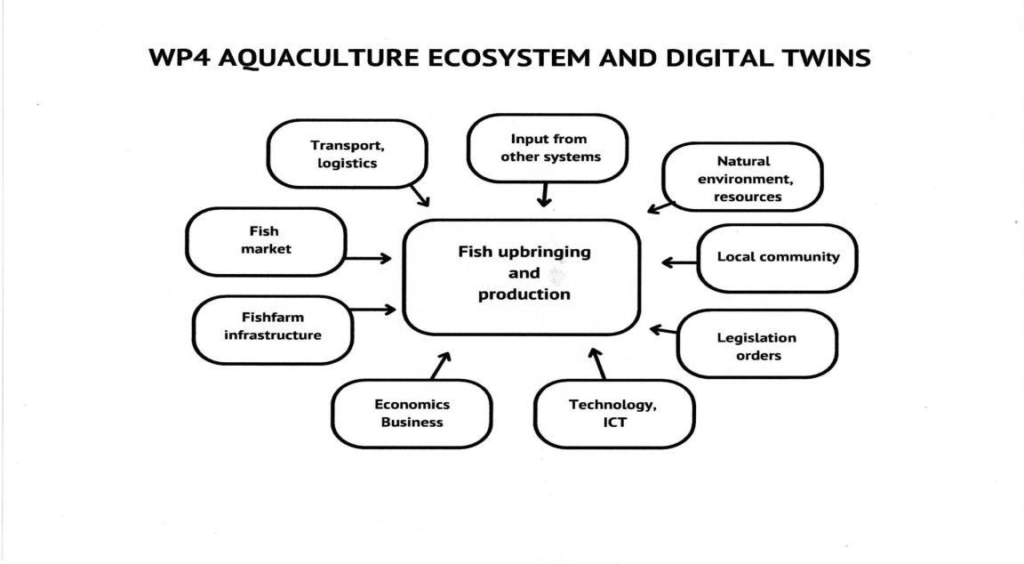
Digital twins and aquaculture ecosystem (WP4). Environmental and green deal aspects force us to develop aqua business education. The focus is not on fish upbringings only, but transport, logistics, investments, cost- benefit anaylyses and marketing of fish products and aquaculture cannot be seen as separate phenomena from rural
development. To reach market demands for efficiency and resist climate change –all these need re-thinking and revised education concepts into a more holistic approach. The whole value chain of aquaculture business can be complex and consists of numerous stakeholders. Digital twins refer here to the virtual model of aquaculture engineering i.e. digitised copy from reality (fish farm) that corresponds to physical fish farm. With the help of digital twins, different aquaculture business models can be tested and choose the best alternatives for further development.
In theory, AQUADEVBUS – project is ambitious yet rather straightforward: Improving HEI education and competency, knowledge and research with wide scope. This new knowledge input will enrich innovations and competitiveness of students and widen concepts on aqua business including regional and international farm visits, seminars and training camps promoting students’ talent.
We will consolidate these aspects in curriculums and into organisational structures of participating universities and then disseminate results to other East African universities.
In practice, due to the challenging nature of intercontinental knowledge transfer and development projects, we must be very pragmatic and precise in the methodology and concepts. Therefore, we have set several milestones – in details elaborated per WP in the Work Plan – that are crucial for the development of aquaculture education
development. In each milestone, the final decision is based on careful evidence-based analysis and the decision will be made in democratic way. Project meetings – either face-by-face or virtual – will take place at each milestone