AQUADEVBUS PROJECT FINAL MEETING
Celebrating Achievements, Partnerships and the Future of Aquaculture Education
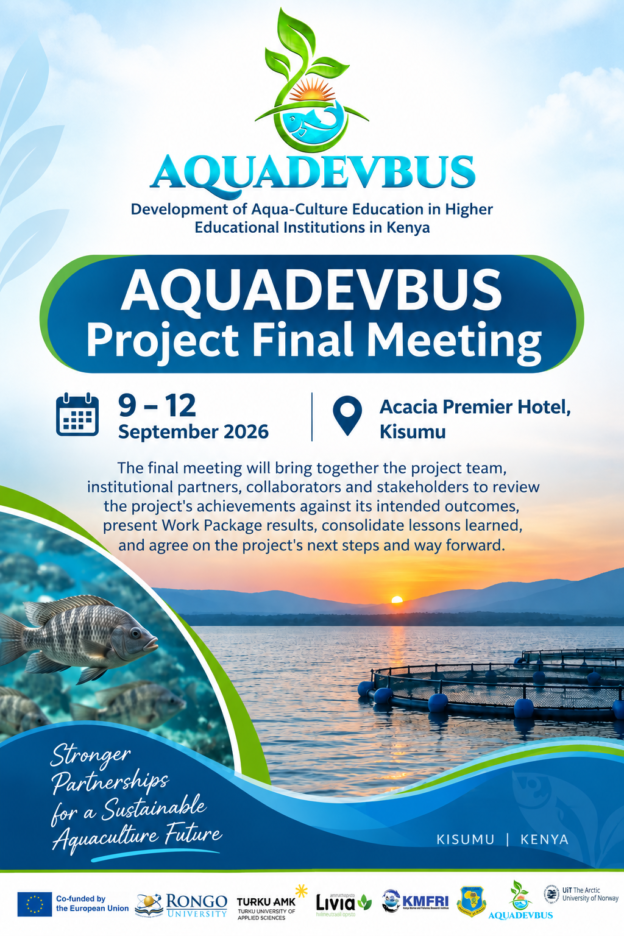
9–12 September 2026 | Acacia Premier Hotel, Kisumu, Kenya
A Milestone Meeting for Aquaculture Education
The AQUADEVBUS Project Final Meeting was held from 9 to 12 September 2026 in the lakeside city of Kisumu, Kenya, bringing together project partners, researchers, educators, students and key stakeholders to reflect on the achievements of the three-year initiative and chart the way forward.
The Development of Aqua-Culture Education in Higher Educational Institutions in Kenya (AQUADEVBUS) project is an Erasmus+ Capacity Building in Higher Education initiative designed to strengthen aquaculture education, practical skills development, digital innovation and university–industry collaboration in Kenya and the wider East African region.
The project has focused on five interconnected areas: project management and coordination; aquaculture course development; pedagogical teaching enhancement; digital twins, aquaculture value chains and economic engineering; and dissemination and communication.
Four Days of Reflection, Review and Collaboration
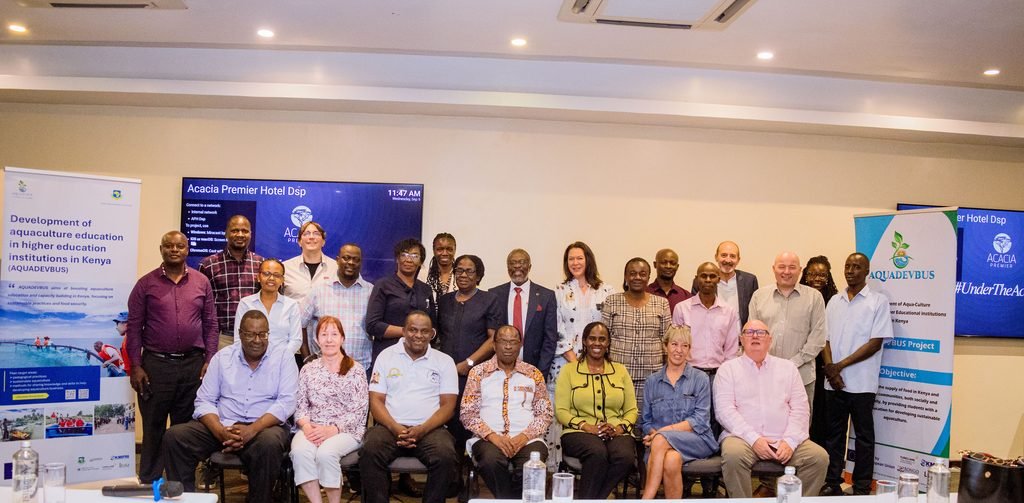
Project partners and stakeholders during the AQUADEVBUS Final Meeting in Kisumu.
DAY 1 | 9 September 2026
Opening, Reflection and Work Package Reviews
The meeting opened with remarks from institutional leaders and project stakeholders, setting the tone for four days of reflection, knowledge sharing and consolidation of project results.
The opening sessions highlighted the importance of strengthening aquaculture education and ensuring that the partnerships developed through AQUADEVBUS continue beyond the formal project period.
Presentations from the leaders of Work Packages 1, 2 and 3 provided an overview of progress in project management, curriculum development and pedagogical innovation.
Among the achievements presented were the successful development and delivery of the AQUADEVBUS aquaculture course, the introduction of learner-centred approaches, and the integration of practical, field-based learning into aquaculture education. The project report confirms that the first aquaculture course was successfully delivered and evaluated, while the Multi-Competence Learning framework was operationalised across partner institutions.
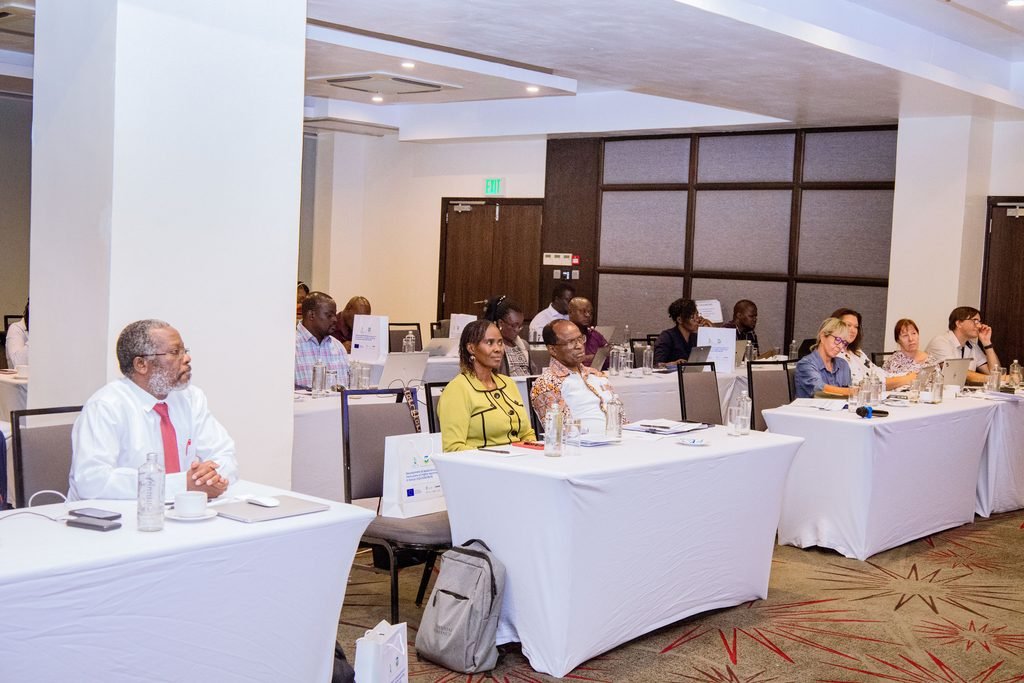
Project leaders and stakeholders during the opening session of the Final Meeting.
DAY 2 | 10 September 2026
Digital Innovation and Dissemination
Day 2 focused on Work Package 4 – Digital Twins: Value Chain and Economic Engineering in Aquaculture and Work Package 5 – Dissemination and Communication.
The WP4 presentation highlighted progress in aquaculture ecosystem mapping, modelling and digital innovation. Field engagement had brought project partners into contact with farms, fish farmers, Beach Management Units, academic institutions and regulatory stakeholders. These engagements supported the mapping of production, processing, distribution and environmental components of the aquaculture value chain.
A preliminary aquaculture ecosystem model and a digital-twins development framework were established. The approach provides a foundation for simulation-based learning and more data-informed decision-making in aquaculture.
WP5 presented the project’s progress in communication and dissemination, including the development and continued use of the project website, social-media engagement, stakeholder networking, conference participation and production of communication materials.
Following the presentations, partners worked in individual work-package groups to address pending issues, provide additional information and strengthen the remaining project deliverables.
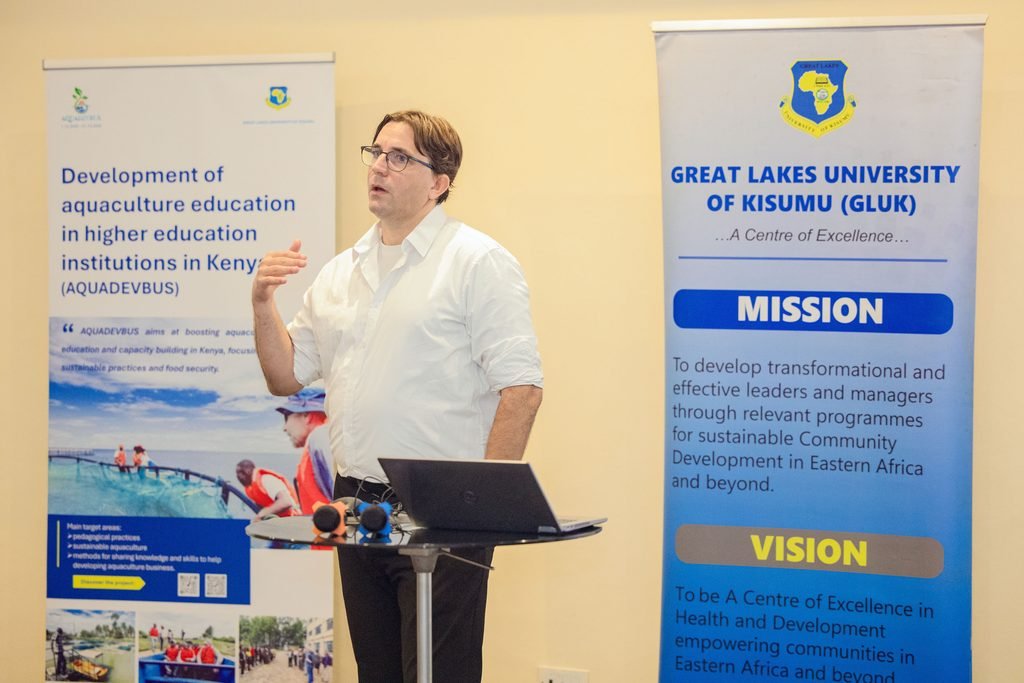
Partners reviewing digital innovation, value-chain development and dissemination achievements.
DAY 3 | 11 September 2026
Consolidating Results and Lessons Learned
The third day focused on consolidating the achievements and lessons emerging from the different work packages.
Partners reviewed outstanding deliverables, implementation experiences and areas requiring further attention before the formal completion of the project. Particular emphasis was placed on strengthening documentation, ensuring consistency across outputs and capturing lessons that can inform future collaborative projects.
The discussions also reinforced the value of experiential learning and university–industry collaboration. AQUADEVBUS has used fish farms and community-based production units as “live cases”, enabling students to engage with practical challenges involving pond management, feeding and water-quality monitoring.
The project has also established stronger links between universities and aquaculture stakeholders, helping align academic training with real-world industry needs.
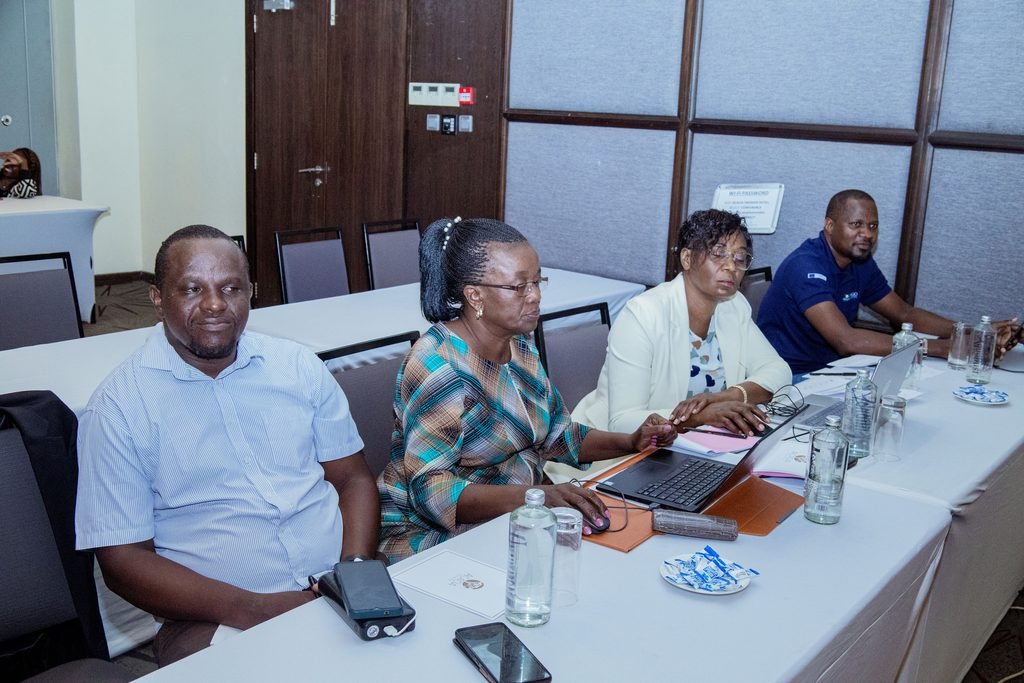
Project partners working together to consolidate deliverables and lessons learned.
DAY 4 | 12 September 2026
Sustainability and the Way Forward
The final day focused on sustainability, institutionalisation and the future of the partnerships created through AQUADEVBUS.
Discussions centred on how project innovations can be embedded within participating universities and how the consortium can continue collaborating after the formal project period.
Key priorities include maintaining the AQUADEVBUS aquaculture curriculum, continuing staff capacity development, institutionalising demonstration farms as training hubs, strengthening university–industry partnerships and advancing digital-twin applications in aquaculture education.
The project sustainability framework places particular emphasis on embedding curricula, teaching materials, pedagogical approaches, digital resources and quality-assurance mechanisms into regular university programmes. It also envisages continued collaboration among Kenyan, Finnish and Norwegian institutions, together with industry, government and development partners.
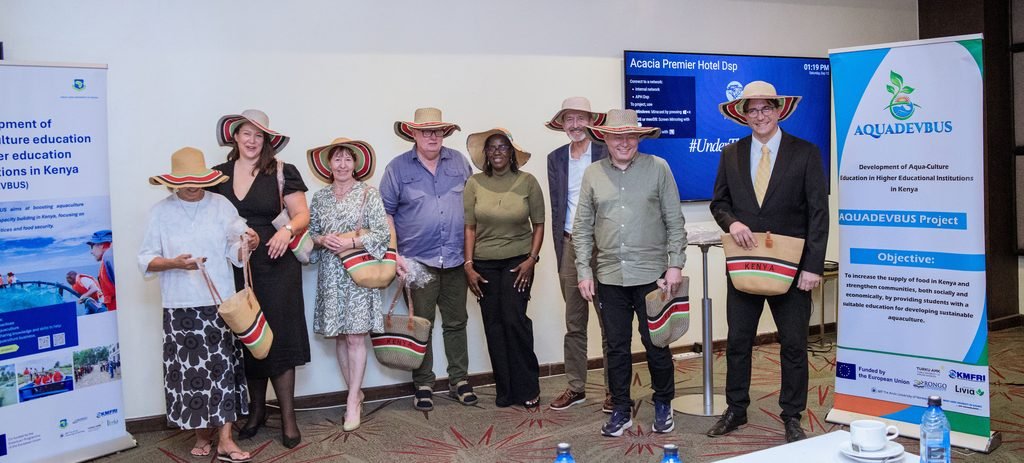
Partners and stakeholders at the conclusion of the AQUADEVBUS Final Meeting.